Rugby 101
How Rugby Came to Be
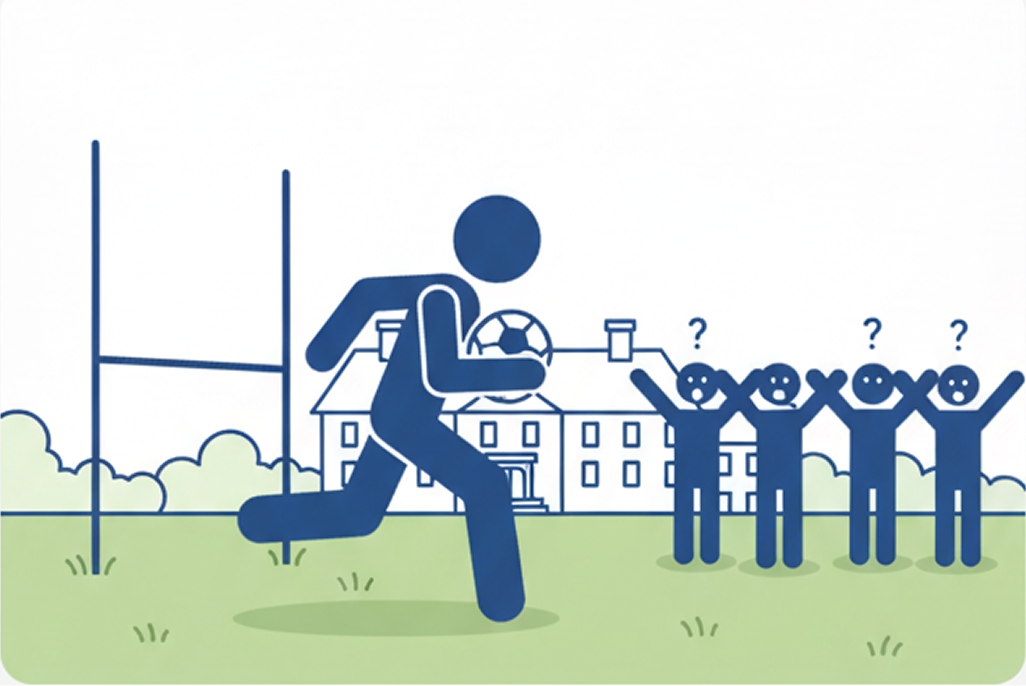
In 1823, William Webb Ellis used his hands to pick up a ball in a soccer match and ran with it to the goal. That day, rugby was born.
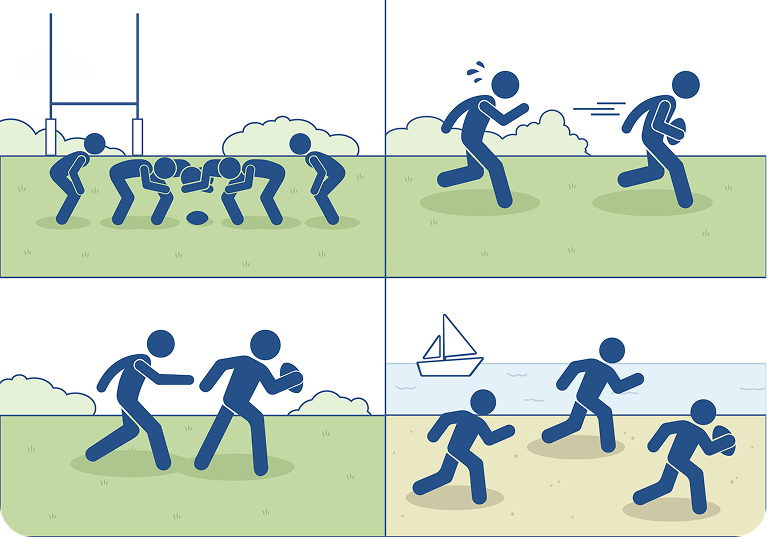
The Many Forms of Rugby
There are two main types of rugby you'll see a lot: rugby fifteens and rugby sevens. While those are the most popular versions, there are also other kinds like touch rugby, beach rugby, and others. These are often used as a great way for players to learn the basics and get better before they play the main versions of the game.
History
Protocols
Safer Without Pads
Despite not wearing pads or helmets, rugby is a very safe sport because players are taught specific tackling techniques and must follow strict rules. Rules against dangerous plays, such as high tackles above the shoulders, are taken seriously.
Yellow Cards vs Red Cards
Yellow Card: they must sit on the sideline for a short period of time (10 minutes in rugby fifteens and 2 minutes in rugby sevens).
Red Card: For very serious rule violations, which removes them from the game completely and can lead to them being suspended for weeks.
%202%20(1).png)

Similarities Between 7s & 15s
- Try: 5 points
- Conversion (kick after a try): 2 points
- Penalty Goal: 3 points
Similarities Between 7s & 15s
7s Rugby
15s Rugby
Positions
7s Rugby

15s Rugby
Commonly Used Rugby Terms
This is the big goal! It's when a player runs with the ball and touches it down on the ground in the other team's end zone, which is called the tryzone. A try is worth 5 points!
Think of this as the "end zone" in American football. It's the area at the very end of the field where you have to touch the ball down to score a try.
After a team scores a try, they get a chance to score more points by kicking the ball through the goal posts. If they make the kick, they get 2 extra points. In Rugby Sevens, players have to kick the ball just after it bounces off the ground.
This is a kick that a team gets for free when the other team breaks a big rule. If they kick the ball through the goal posts, they get 3 points.
This is just like the sideline in other sports. If the ball goes past this line, it's considered "out of bounds."
This is the line that separates the main field from the tryzone. You have to cross this line and touch the ball down to get your 5 points.
When a player with the ball is brought to the ground by an opponent. The player with the ball has to let it go right away. Unlike American football, the game doesn't stop after a tackle!
This happens after a tackle when the ball is on the ground. Players from both teams pile up over the ball to try to push the other team away and win possession. The players have to stay on their feet.
It is like a mini huddle that forms when the player with the ball is being held by opponents and their own teammates join in to help. The ball is off the ground, and both teams are trying to push each other backward to gain ground.
When the ball goes out of bounds, the game restarts with a lineout. The forwards from both teams form two lines facing each other, and one player throws the ball in. The players in the line can be lifted up by their teammates to catch the ball.
It is a way to restart the game after a small mistake. The forwards from both teams lock their arms together and push against each other. The ball is rolled into the middle, and the players use their feet to try to get it back to their own side.
This is like a "time out" or a "penalty box." If a player does something dangerous or breaks a serious rule, they have to sit out of the game for 10 minutes in Rugby 15s or 2 minutes in Rugby 7s.
This is the big goal! It's when a player runs with the ball and touches it down on the ground in the other team's end zone, which is called the tryzone. A try is worth 5 points!
Think of this as the "end zone" in American football. It's the area at the very end of the field where you have to touch the ball down to score a try.
After a team scores a try, they get a chance to score more points by kicking the ball through the goal posts. If they make the kick, they get 2 extra points. In Rugby Sevens, players have to kick the ball just after it bounces off the ground.
This is a kick that a team gets for free when the other team breaks a big rule. If they kick the ball through the goal posts, they get 3 points.
This is just like the sideline in other sports. If the ball goes past this line, it's considered "out of bounds."
This is the line that separates the main field from the tryzone. You have to cross this line and touch the ball down to get your 5 points.
When a player with the ball is brought to the ground by an opponent. The player with the ball has to let it go right away. Unlike American football, the game doesn't stop after a tackle!
This happens after a tackle when the ball is on the ground. Players from both teams pile up over the ball to try to push the other team away and win possession. The players have to stay on their feet.
It is like a mini huddle that forms when the player with the ball is being held by opponents and their own teammates join in to help. The ball is off the ground, and both teams are trying to push each other backward to gain ground.
When the ball goes out of bounds, the game restarts with a lineout. The forwards from both teams form two lines facing each other, and one player throws the ball in. The players in the line can be lifted up by their teammates to catch the ball.
It is a way to restart the game after a small mistake. The forwards from both teams lock their arms together and push against each other. The ball is rolled into the middle, and the players use their feet to try to get it back to their own side.
This is like a "time out" or a "penalty box." If a player does something dangerous or breaks a serious rule, they have to sit out of the game for 10 minutes in Rugby 15s or 2 minutes in Rugby 7s.